In our last blog, we explored The Role of Real Estate, Infrastructure and Place Making. This blog looks into KSF 6: The Role of Diversity, Equality and Inclusion.
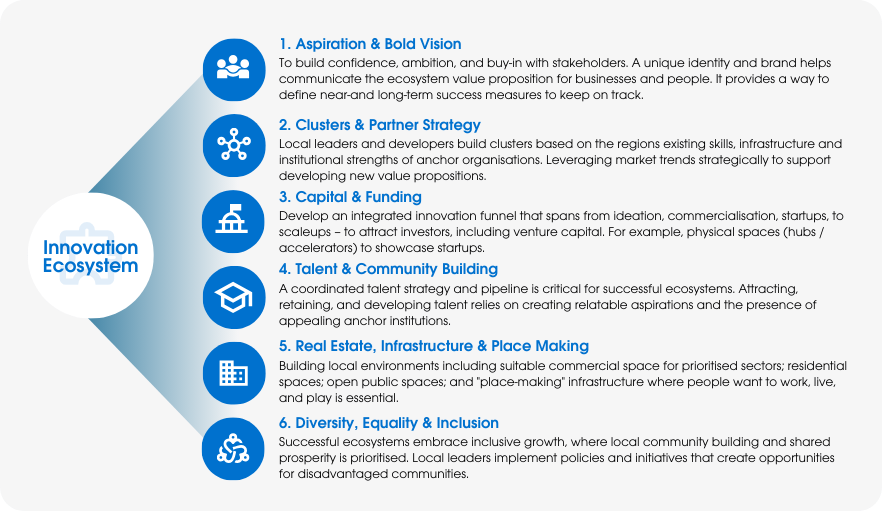
Innovation ecosystems must prioritise inclusion and shared prosperity. It’s crucial that local leaders implement policies and initiatives that offer opportunities to historically disadvantaged communities, ensuring that no one is left behind as the ecosystem develops. Inclusive growth means everyone has a seat at the table, and this is essential for an ecosystem to truly prosper.
One key aspect of building an inclusive ecosystem is ensuring that the talent pipeline is diverse. The lack of representation in STEM fields, particularly among women and minority groups, remains a significant challenge. However, by spotlighting success stories from these underrepresented communities, it can inspire others to follow suit. These role models demonstrate that success is possible, and their experiences can motivate others to pursue careers in innovation-driven fields.
Accessibility remains a challenge. While many individuals from disadvantaged backgrounds may not have had the traditional educational pathways into tech or business, ecosystems must create clear and supportive entry points. This can be achieved by offering alternative education routes such as coding boot camps, community programs, and apprenticeships that equip individuals with the skills needed.
Diverse perspectives are also vital for driving innovation. When people from different backgrounds come together, they bring with them unique experiences and ways of thinking. This diversity of thought is essential for solving complex problems and addressing challenges in novel ways.
Moreover, creating a sense of place and belonging is central to ensuring that diverse talent not only enters the ecosystem but stays. This requires careful attention to urban design and community engagement. Ensuring that local communities benefit from the ecosystem’s growth, without being displaced, should be a priority. Inclusive policies that encourage local hiring, support affordable housing, and provide access to resources are key.
When the ecosystem champions diversity, equity, and inclusion, it attracts a broader pool of talent, encourages richer innovation, and fosters long-term social impact. They are essential drivers of economic and creative growth. By embedding these principles into the ecosystem’s foundation, leaders can create a thriving, fair, and accessible community capable of tackling challenges.
Case Studies
Boston – Cambridge Innovation Ecosystem: Roxbury neighbourhood Innovation District (NID)
Boston-Cambridge leaders took proactive steps to support disadvantaged communities by launching policies that encouraged innovation while protecting existing residents from displacement as rents rose and new public spaces were developed.
To achieve this, the Boston City Council created the Roxbury Neighbourhood Innovation District (NID), an initiative aimed at bringing innovation and technology to the low-income, predominantly minority neighbourhood of Roxbury. The goal was to boost local economic prosperity and ensure that existing communities were not pushed out by gentrification.
At the heart of this effort was the establishment of the Roxbury Innovation Centre (RIC). RIC provided accessible workspaces and flexible event spaces to empower residents and entrepreneurs. It offered vocational training, networking events like Monthly Café Nights, and workshops designed to break down barriers for local innovators. By making business resources readily available and creating a welcoming environment, RIC challenged stereotypes about Roxbury’s potential and helped foster a sense of ownership and opportunity among residents.
The Neighbourhood Innovation District Committee (NIDC) played a key role in fostering inclusive economic growth by collaborating directly with residents on a shared vision for the area’s future. The NIDC recommended supportive policies, including streamlined regulatory frameworks for entrepreneurs and a district housing plan focused on providing affordable housing and business spaces to prevent displacement.
The Roxbury model demonstrated how innovation districts could be designed with equity at their core. Embedding community participation, elevating diverse voices, and ensuring that economic benefits stayed within the neighbourhood.
Bridging the FinTech Skills Gap
The FinTech Skills Framework, developed by Whitecap Consulting in partnership with BMet College and SuperTech, is a standout example of how regions can use education to build a more diverse and inclusive innovation ecosystem. Commissioned to tackle critical skills shortages in the West Midlands’ rapidly growing FinTech sector, the framework aimed not only to close skills gaps but also to unlock the potential of the region’s young, diverse population by creating alternative pathways into high-quality careers.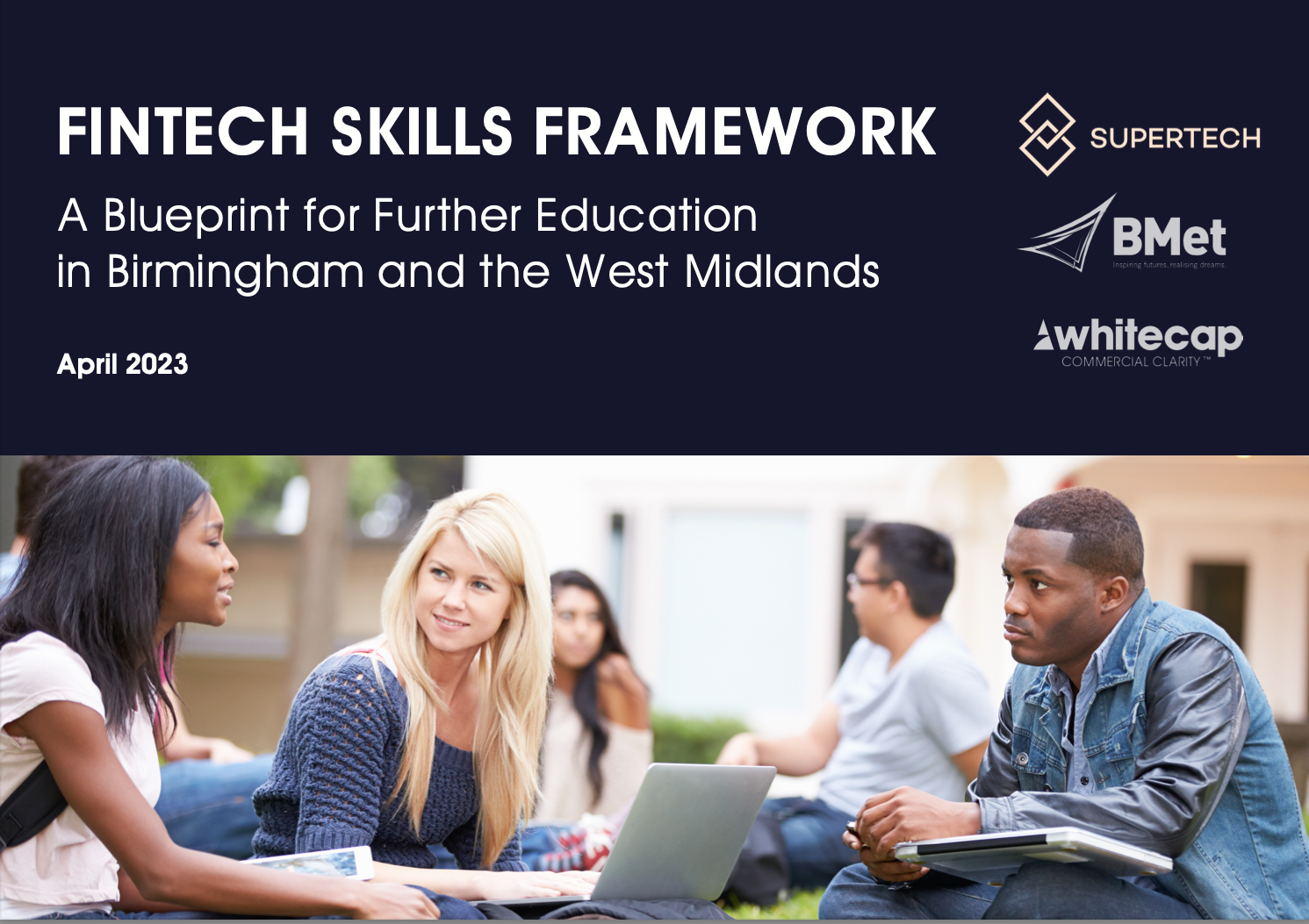
A key strength identified was the diverse student base within local Further Education (FE) institutions like BMet College. Given FinTech’s historic underrepresentation of women and ethnic minorities, this presented a unique opportunity to improve diversity in the sector. However, the region faced significant challenges: there were too few targeted entry points for underrepresented groups, and employers lacked awareness of how FE colleges could help meet their talent needs.
Therefore, the development of the FinTech Skills Framework directly addressed these gaps by recommending accessible, alternative education routes. One flagship initiative was the launch of the UK’s first FE-led FinTech short course, designed with a flexible, hybrid learning model. This course covers essential FinTech concepts, regulatory knowledge, and hands-on engagement with industry experts. Critically, it aims to empower students from all backgrounds with immediately applicable, employer-recognised skills, positioning them for high-growth FinTech careers.
Additionally, the report’s emphasised offering bootcamps and academy-style offerings which involve short, intensive programs tailored to upskill people with transferable skills. This showed a commitment to widening participation beyond traditional academic routes. The recommended modular, stackable course structures and collaboration with employers ensure that even those without formal degrees can gain in-demand skills and enter or progress within the sector.
By creating alternative, accessible pathways, the FinTech Skills Framework enables a broader range of people to enter FinTech which in turn gathers diverse perspectives that can drive innovation and strengthen the industry for the long term.
Three Key Takeaways
-
Inclusive Growth is Essential for a Thriving Ecosystem: A successful innovation ecosystem isn’t just about economic growth; it’s about ensuring that everyone benefits. Leaders must implement policies that create opportunities for historically disadvantaged communities, ensuring diverse talent is not only attracted but also retained.
-
Alternative Pathways are Key to a Diverse Talent Pipeline: Traditional educational routes are not the only way into innovation. By creating and promoting alternative entry points, such as coding boot camps, community programs, and apprenticeships, ecosystems can bridge skills gaps and empower individuals from all backgrounds to access high-growth careers.
-
Proactive Community Engagement Prevents Displacement: For innovation to truly benefit a community, it must be designed with equity at its core. This means actively engaging residents, listening to their needs, and implementing policies such as like supportive housing plans that protect them from the negative impacts of gentrification, ensuring the economic benefits of growth remain within the neighbourhood.
End of Series: Building Better Innovation Ecosystems
This post marks the final entry in our seven-part series exploring what it takes to build successful innovation ecosystems. From setting a bold vision to embedding diversity, equity and inclusion, we’ve looked at the core ingredients that help ecosystems thrive, both socially and economically.
- Blog 1: Beyond Disruption: Decoding the Strategic DNA of New Entrants in the UK Mortgage Market
- Blog 2: The Driving Force: How Founder Motivation Determines Mortgage Lender Strategy
- Blog 3: The FinTech Paradox: Why Technology Enables Efficiency but Fails to Deliver Lower Prices
- Blog 4: Structural Barriers: Why Disruptive Innovation is Lacking in UK Residential Lending
- Blog 5: The Survive & Thrive Strategy: Specialisation and Service in the UK Mortgage Sector
- Blog 6: Ecosystems: The Missing Collaborative Link in Mortgage Innovation
- Blog 7: The Strategic Motivation Impact Matrix: A New Framework for Financial Services Strategy
At Whitecap, we support organisations in building and enhancing innovation ecosystems. In addition to working directly with clients, we conduct research and analysis to inform strategic decision-making and thought leadership. If you need support with a project or are looking to develop an innovation ecosystem, get in touch.