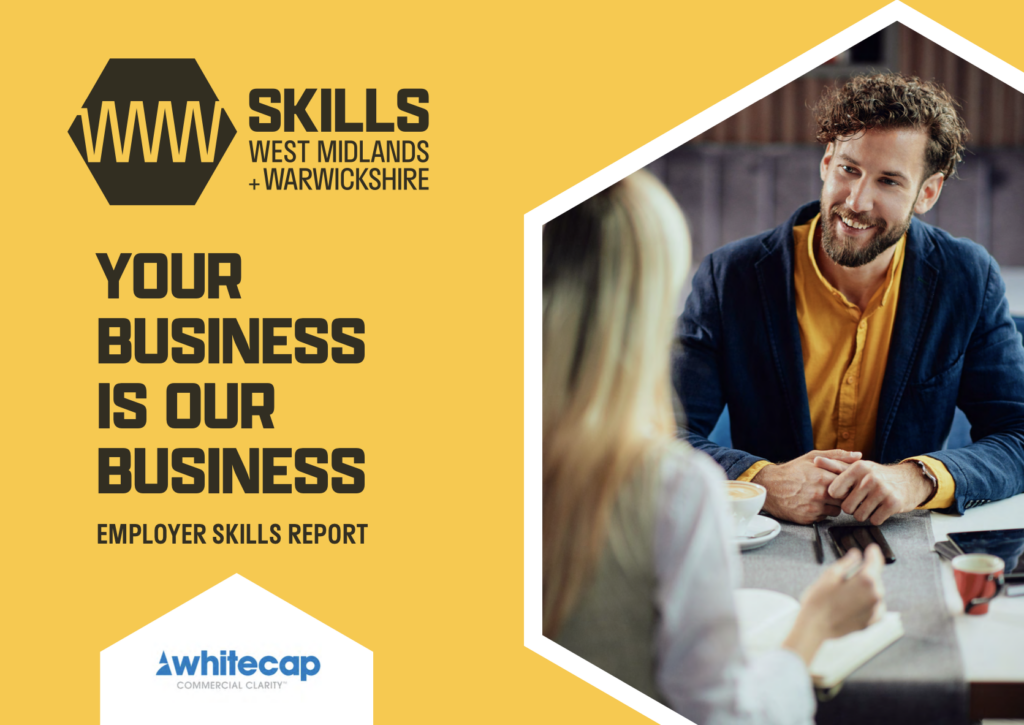
Commissioned by a partnership of Further Education (FE) providers across the region, the report is the result of extensive research into the skills needs of key sectors: Construction, Engineering & Manufacturing, Digital & ICT, and Logistics & Distribution. It brings together insights from curriculum mapping, desk-based analysis, and in-depth conversations with employers.
What makes this work so important is not just the analysis itself, but how it is already being used.
The findings directly shaped the creation of Skills West Midlands and Warwickshire (SkillsWMW), a new collaborative model designed to provide a single point of access to training provision across the region. Since March 2024, the initiative has:
- Engaged over 400 businesses and industry groups
- Launched 9 strategic employer-facing events, reaching more than 2,000 businesses
- Supported 52 FE staff in sharing best practices and performance tools
- Awarded 22 businesses with the SkillsWMW kitemark for excellence in collaboration, including in inclusion and SEND
- Built a unified brand and regional website to centralise engagement and simplify access to skills provision

The project responds to a long-standing gap: nearly 74% of employers had not worked with post-16 education and training providers in the past five years. Yet, over 90% of those interviewed expressed a strong desire to collaborate more closely.
SkillsWMW is a tangible response to that demand, designed not just to address skills gaps, but to help employers co-create the solutions.
As the regional economy evolves, initiatives like this ensure skills are not seen as an afterthought, but as a strategic asset for growth.
Why Skills Matter: A Strategic Perspective
Skills aren’t just an HR concern, they’re a cornerstone of regional competitiveness. As economic priorities evolve, the ability of a region to match workforce capability with business demand becomes a key driver of productivity, innovation, and inclusive growth.
This makes collaboration between educators, employers, and policymakers not only valuable but essential. It also requires clarity: where are the gaps, how can they be closed, and who needs to act?
That’s where evidence-led insight adds real value. By bringing together market data, strategic foresight, and stakeholder input, it becomes possible to design interventions that are targeted, sustainable, and measurable.
At Whitecap, we are proud that our research provided the foundation for this initiative. This is the foundation of our work in regional strategy. Whether it’s helping define sector priorities, supporting innovation ecosystems, or aligning skills provision with employer need, we believe that long-term economic resilience starts with asking the right questions, and listening to what the data (and people) tell us.
To find out more about our work in skills and regional growth, visit our Case Studies.