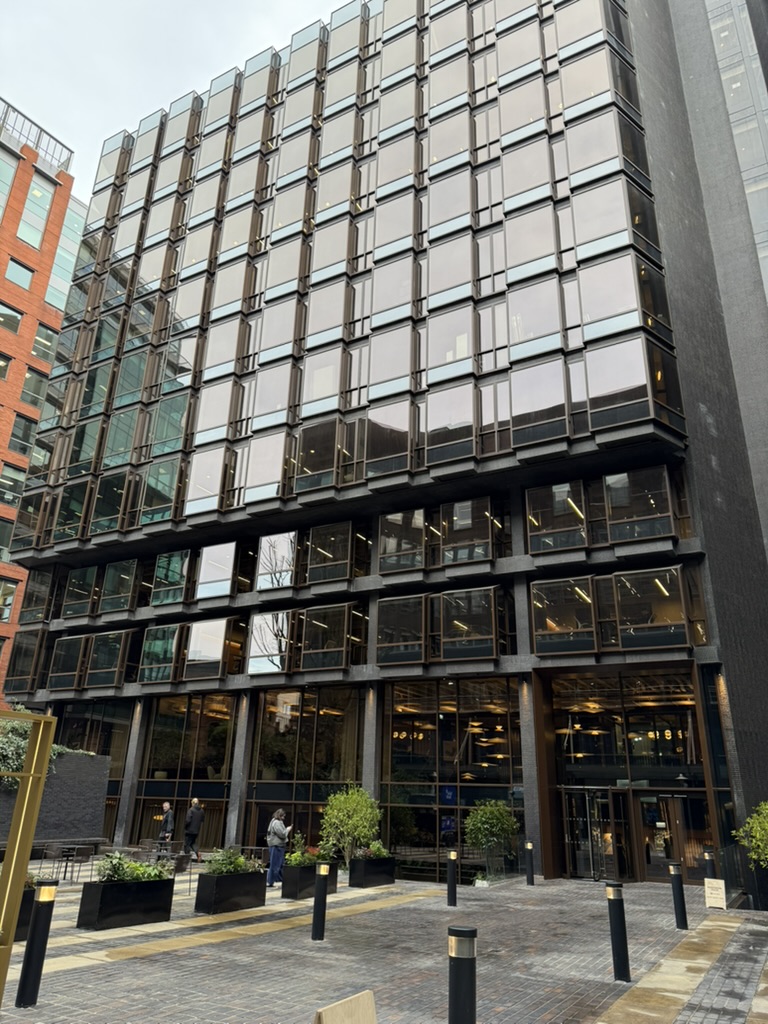
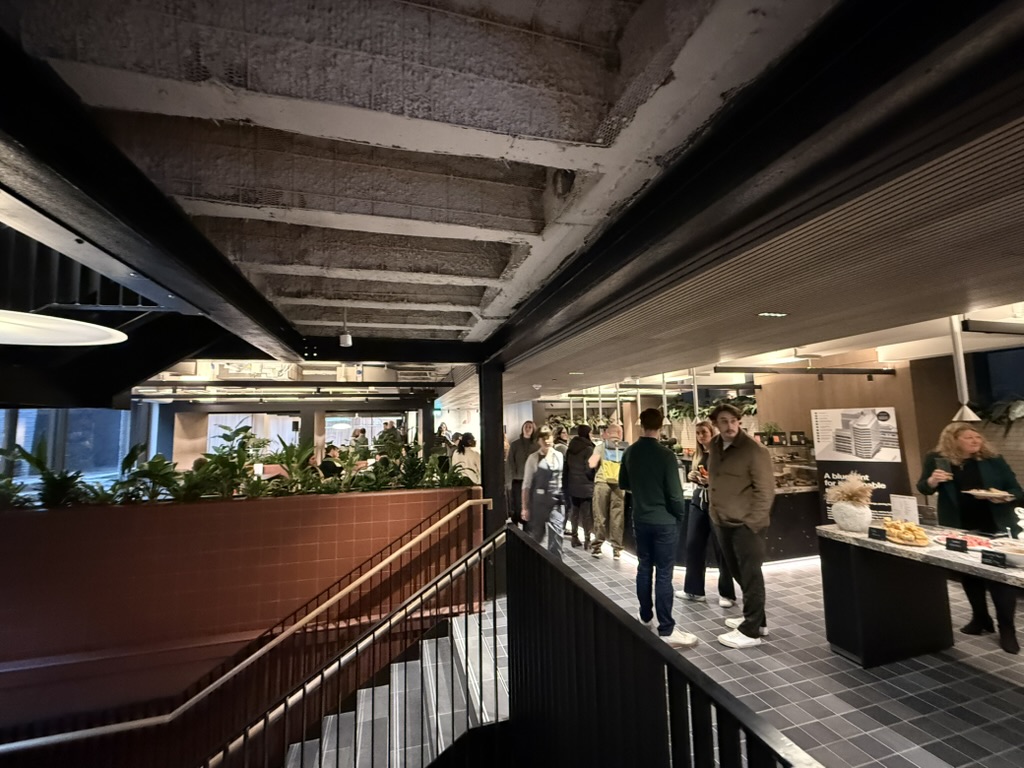
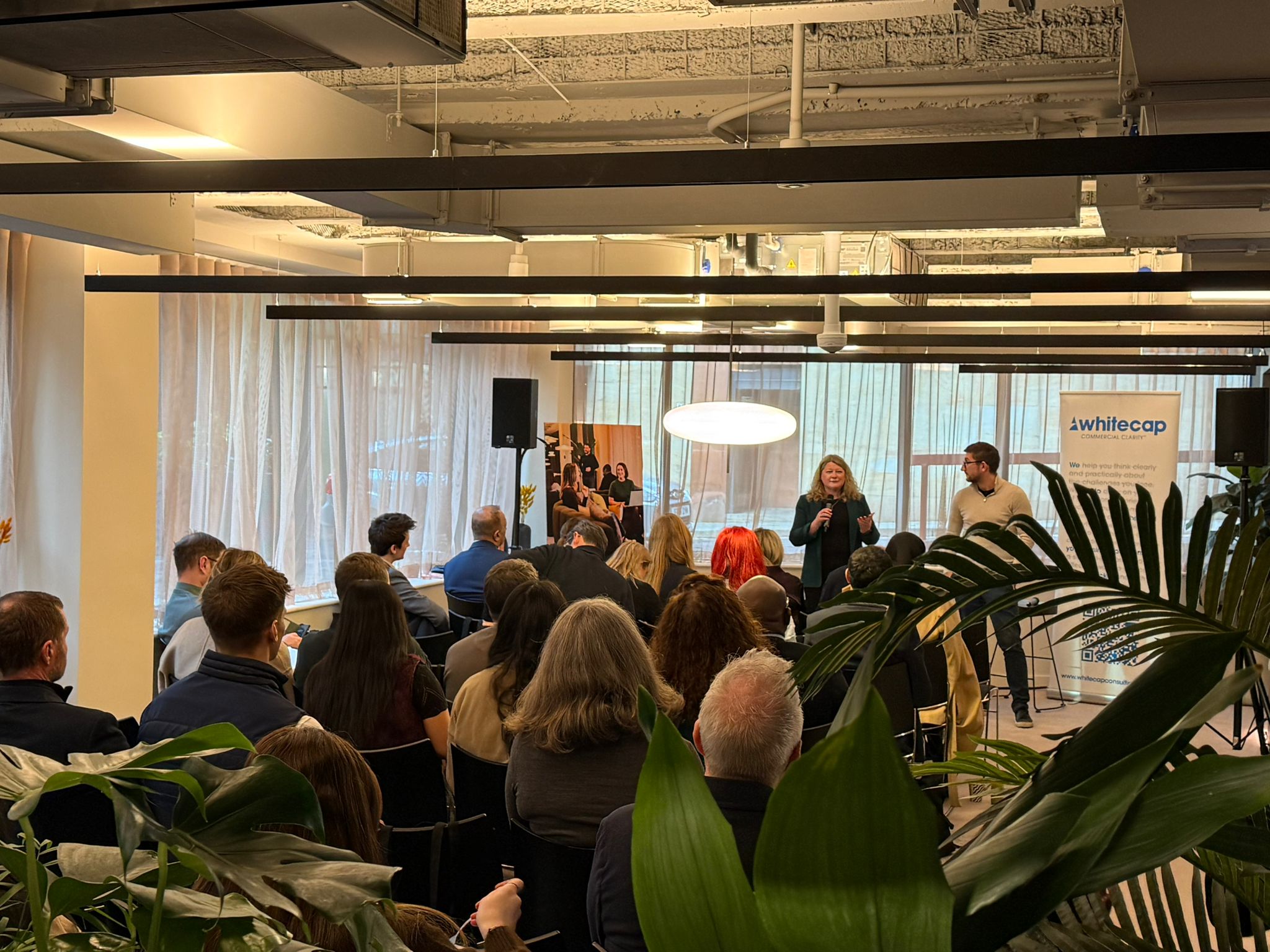
 The CEO Strategy Forum was held at Pall Mall, Bruntwood SciTech’s newly transformed workspace in the heart of Manchester. This special edition of the Forum created space not for polished soundbites, but for honest reflection on what it really feels like to lead today, and what lies ahead in a world increasingly influenced by technology.
The session was opened by Katherine Megson and Jack Maher of Bruntwood SciTech, who welcomed guests and told the story of the major retrofit project that had culminated in the opening of the stunning ‘new’ building at Pall Mall. Chris Oglesby mentioned that the building was the original location of his father’s first office, which adds a touch of nostalgia to what is a state of the art workspace.
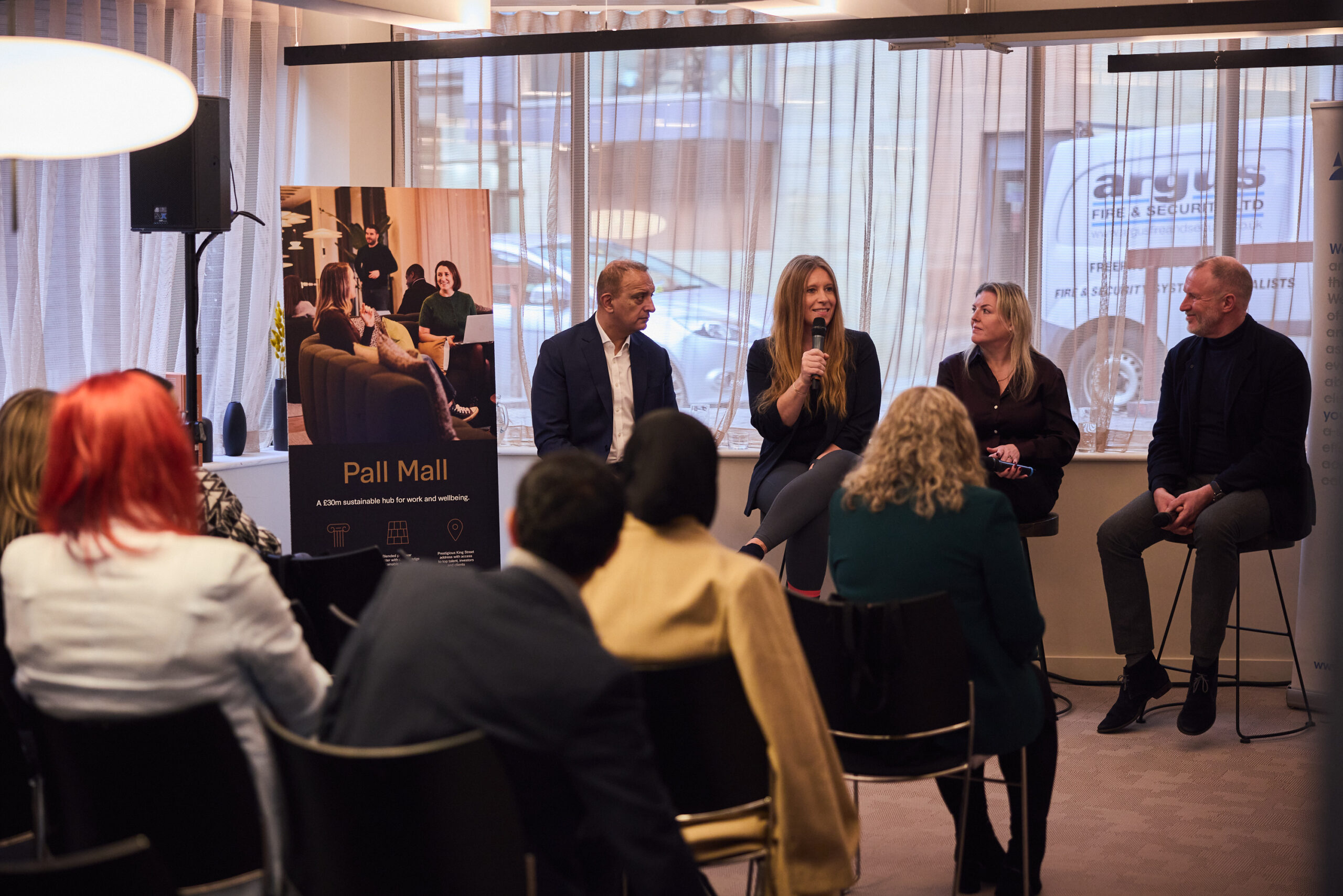
The event was chaired by Julian Wells, Director at Whitecap Consulting, who put a series of questions to the speakers over the course of a panel discussion which also featured questions from the audience. The guest speakers were:
- Asif Ghafoor, CEO, Be.EV – backed by tens of £ millions of investment from Octopus Energy Generation and others
- Chris Oglesby, CEO, Bruntwood SciTech – running the successful commercial property family business started by his father
- Katie Gallagher OBE, MD, Manchester Digital – the representative body for Manchester’s tech sector
- Hanna Sillitoe, Director, Hanna Sillitoe – a Dragons Den skincare company

Leadership journeys: authenticity, instinct and learning the hard way
The discussion opened with personal leadership stories, revealing that there is no single path to becoming a CEO. What emerged instead was a shared emphasis on self-awareness, authenticity and learning through experience, not to mention some fascinating life stories.
Panellists spoke about backing themselves, trusting instinct, and accepting that leadership often involves acting with incomplete information. Several reflected on the importance of trying things, failing fast and learning, rather than waiting for certainty. As one speaker noted:
“It’s better to give it a try and learn from failure than not try at all.”
There was also a strong theme around being yourself as a leader by understanding your own strengths, recognising your “shadow side”, and building teams that complement rather than replicate you. Authentic leadership, rather than a manufactured leadership style, was seen as critical to resilience and credibility.
Technology: productivity, pressure and unintended consequences
Technology sat at the heart of the conversation – not as an abstract opportunity, but as a daily operational and leadership challenge.
The panel described a world where technology is simultaneously:
- Driving productivity, particularly through data, automation and AI
- Creating pressure, with expectations to move faster, cut costs and do more with fewer people
- Disrupting roles, especially at entry and junior levels
There was a strong recognition that AI is not just a cost-saving tool, but one that reshapes how organisations think about skills, career pathways and workforce structure. Several panellists highlighted the tension between investing in automation while still finding time and capacity to train people – particularly juniors – in an environment where margins and headcount are under pressure.
Importantly, the conversation moved beyond hype. Leaders spoke candidly about the hidden costs of AI adoption, the risk of stolen focus, and the danger of deploying technology without a clear understanding of customer behaviour or human impact. As one contributor put it:
“Technology should support choice, not exclude people.”
 Strategy in practice: focus, consolidation and doing fewer things better
A recurring theme was the need for greater focus.
In the electric vehicle changing sector, for example, we heard how Be.EV has shifted its focus away from experimentation towards consolidation: with the primary focus on getting the basics right, improving customer experience, and strengthening core infrastructure over the next three to five years. Growth will be grounded in execution rather than expansion for its own sake.
There was also an honest acknowledgement that hard decisions are unavoidable. The panel talked about the necessity of being more ruthless at times, such as stopping initiatives that don’t work, scaling things back when needed, and recognising when significant investment has not delivered the intended outcome.
This realism extended to conversations about capital, productivity and sustainability. Several panellists noted that becoming more productive does not always mean spending less, but it does require spending better, with clearer outcomes and accountability.
People, wellbeing and the human side of leadership
Despite the heavy focus on technology and strategy, the human dimension remained central throughout.
Personal and organisational wellbeing surfaced repeatedly. The panel reflected on the emotional weight of leadership, the challenge of maintaining balance, and the responsibility leaders have in shaping cultures where people can perform without burning out.
There was also concern about attention and distraction in a hyper-connected world. Leaders spoke about the need to consciously protect focus for themselves and their teams and to role-model healthier ways of working. Additionally, there was acknowledgement than everyone needs to find what works for them, for example Chris described constantly having the urge to learn via reading and listening to other CEO stories.
The importance of physical space was another recurring theme. Offices, science parks and innovation hubs were seen not just as places to work, but as environments that enable connection, learning and serendipity – particularly for younger people early in their careers. For example, Hanna explained that being on a science park (Alderley Park), had influenced the business’ decision to consider manufacturing.
Place, policy and regional opportunity
The Forum also explored the role of place in shaping economic opportunity. Panellists reflected on how cities, towns and regions can work better together, and how infrastructure, policy and long-term thinking are needed to unlock inclusive growth.
From manufacturing and energy to digital and creative industries, there was optimism about the North’s potential – but also realism about the challenges ahead. Chris and Katie each highlighted the importance of tech ecosystems, strong trade bodies, and collaboration between business, government and education.
Looking ahead: cautious optimism in a state of flux
If one phrase captured the mood of the discussion, it was “a state of flux.”
There was genuine optimism about innovation, technology and regional momentum – but also clear-eyed recognition that the next few years will demand adaptability, courage and disciplined leadership. AI, in particular, was seen as a force for good if deployed thoughtfully – but one that will reshape roles, expectations and leadership responsibilities at pace.
Attendee Chris Gardner, CEO of Ninety Two Ventures (who had launched a new ‘Founders Unfiltered” report on the day of the event), said in a follow up email:
“I really enjoyed the panel discussion. One of the reasons why it worked so well was because of the diversity of the businesses represented. It was good to see a more traditional ‘consumer brand’ involved too…it’s easy to forget the extent of the disruption to retail in recent years (tech and non-tech enabled)…and I think it is relevant for everyone in the room (whether you touch that industry or not).
“One reflection I had was how senior leadership has evolved, particularly in the last 5-10 years. I’m thinking the move to remote/hybrid working, the style of management moving away from traditional hierarchy, the emergence of a new generation of ‘mid management’, and changes to the more old-school board role, composition, cadence etc. That would be a good topic for a future event.”
As the session closed, one theme stood out above all others: strategy today is less about grand plans, and more about making good choices, consistently, in uncertain conditions.
The CEO Strategy Forum once again demonstrated the value of creating space for leaders to step back, share experiences and learn from one another – not through theory, but through lived reality.
If you’d like to be involved in future CEO Strategy Forum events, please get in touch.